

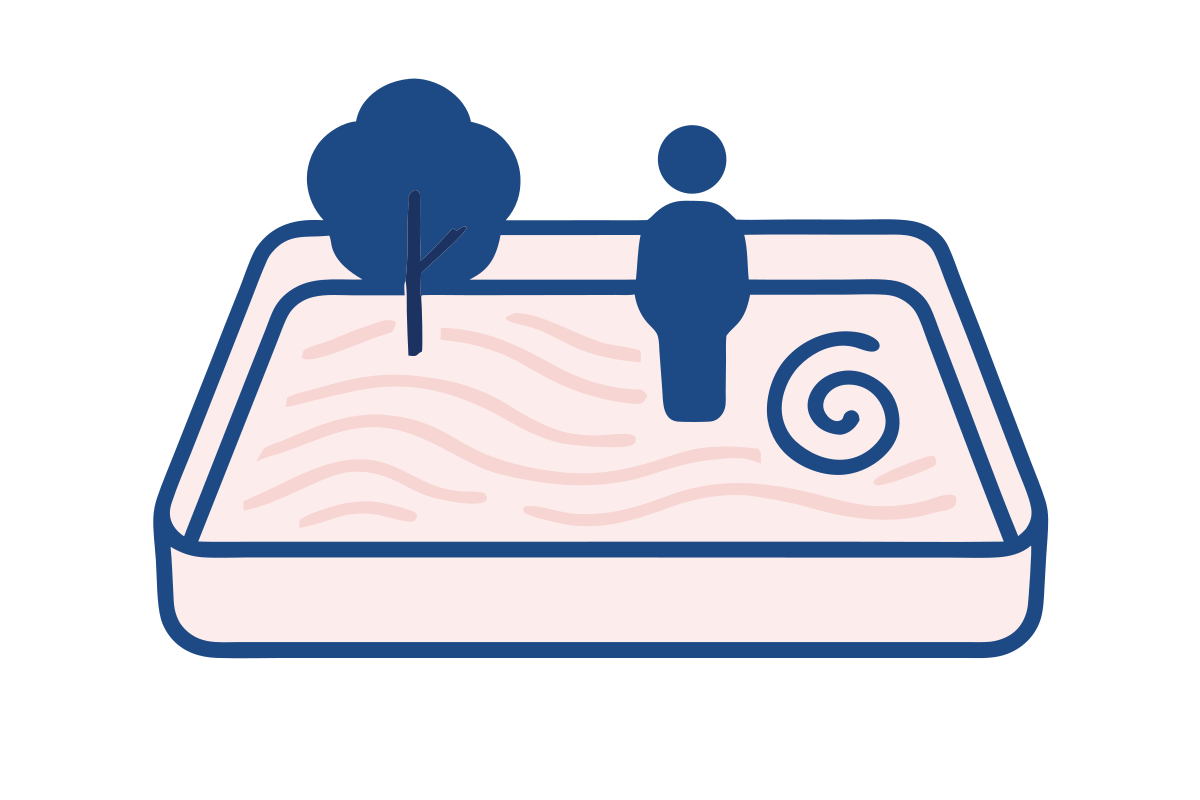
Sand Tray Therapy is a unique form of expressive therapy that allows individuals to explore their thoughts, emotions, and past experiences through symbolic representation. Using a tray filled with sand and a collection of miniature figures, individuals are encouraged to build scenes that reflect their inner world. This method bypasses the need for verbal articulation, making it particularly effective for those who struggle to express themselves, such as children, trauma survivors, or individuals dealing with deep-seated emotional conflicts.
At Swaasthya Healing, Sand Tray Therapy is offered as a safe and non-judgmental space where healing can happen organically. Guided by Dr. Ramya, clients engage in the creative process of building scenes that often mirror their current life challenges, hidden fears, or suppressed memories. Through gentle interpretation and therapeutic dialogue, clients begin to uncover insights and emotions that may have remained buried or unacknowledged, thus initiating the process of emotional release and transformation.
The power of Sand Tray Therapy lies in its ability to bring the subconscious to light without pressure or confrontation. It enables clients to gain perspective, achieve emotional clarity, and restore a sense of inner balance. Over time, these sessions help foster resilience, improve self-awareness, and support mental wellness, making it a valuable modality in treating anxiety, grief, PTSD, developmental issues, and emotional regulation challenges.
At Swaasthya Healing, we use Sand Tray Therapy to help both children and adults explore their inner worlds, build emotional resilience, and work through trauma in a safe and creative space.
Sand Tray Therapy has shown remarkable effectiveness in treating these specific conditions
A persistent feeling of sadness, emptiness, or hopelessness that affects daily life, relationships, and self-worth.
Emotional and physical distress caused by a past traumatic event, often showing up as flashbacks, nightmares, or hypervigilance.
Support for navigating the emotional pain of loss—be it a loved one, relationship, or life role—while learning to heal and rebuild meaning.
Emotional or behavioral difficulties in adapting to life changes like job transitions, relocations, or relationship shifts.
Fear of being judged, rejected, or embarrassed in social situations—often leading to isolation or avoidance behaviors.
Recurring panic attacks with symptoms like racing heart, trembling, and a sense of losing control—often without a clear trigger.
Helping children and adults understand emotional triggers and develop healthy ways to express and release anger.
Mood swings, anxiety, defiance, or withdrawal that impact learning, relationships, and emotional development in young minds.
Unhealthy eating behaviors and body image issues—such as bingeing, purging, or food restriction—linked to deeper emotional struggles.
ADHD is a neurodevelopmental condition marked by persistent patterns of inattention, impulsivity, and/or hyperactivity that can interfere with learning, work, and relationships.
Understanding the Science Behind Sand Tray Therapy
Sand Tray Therapy is especially powerful when words fall short. For children, trauma survivors, or individuals with speech or emotional expression difficulties, this therapy offers a way to communicate through symbols rather than speech. By arranging miniatures in the sand, clients can express feelings that may be too painful, confusing, or deeply buried to articulate verbally.
It is also an effective approach for processing trauma and managing anxiety. The act of externalizing inner turmoil into a physical scene helps clients gain distance from overwhelming emotions, allowing them to observe and reflect in a safe, contained environment. Over time, this leads to greater emotional regulation, improved self-awareness, and a sense of empowerment in dealing with difficult experiences.
Beyond individual healing, Sand Tray Therapy supports growth in interpersonal relationships and internal integration. Couples and families can use the tray to uncover hidden dynamics and develop mutual understanding. On a personal level, clients often discover unresolved inner conflicts—opposing feelings or beliefs that they hadn’t consciously recognized—and work toward resolution through the symbolic world they create. This kind of spontaneous, intuitive expression bypasses the rational mind, enabling deeper insights and healing to emerge naturally.
The Swaasthya Process for Sand Tray Therapy
The process begins with establishing a calm, private environment. We ensure that the client feels emotionally secure and unpressured. This is essential, especially for children, trauma survivors, or anyone new to expressive therapy.
A wide range of miniatures - ranging from people, animals, and nature to abstract symbols - are presented to the client. The client is encouraged to select figures intuitively, without overthinking or needing to justify their choices.
In the sand tray, the seeker arranges the chosen miniatures to create a scene that may reflect their internal world, current challenges, or symbolic representations of their emotions and life journey. No prior experience or artistic skill is needed; this is a space of free, symbolic expression.
Once the scene is complete, we engage the client in gentle reflection, exploring the tray’s symbolism, emotional themes, and possible connections to real-life experiences. This step helps bring unconscious feelings into conscious awareness.
As clients make sense of the scene, they often experience emotional release, gain new perspectives, or find resolution to inner conflicts. With regular sessions, these insights lead to long-term emotional healing, better coping mechanisms, and enhanced self-understanding.
Common questions about Sand Tray Therapy
Hear from those who have experienced the transformative power of Sand Tray Therapy
"As someone who struggles to open up in traditional therapy, Sand Tray gave me a new language. I could express pain and confusion through the tray without having to say a word. Dr. Ramya made the process feel completely safe and meaningful"
College Student
"Our daughter was dealing with grief after losing her grandfather. She wouldn’t talk about it. But in the sand tray, she began to express her sadness and memories. We saw her slowly come back to herself."
Mother of a Teenage Daughter
"I’ve tried talk therapy before, but this was different. It was like my hands knew what my heart was feeling. Each session brought clarity without pressure. I felt more understood than I ever have."
Cricketer
At Swaasthya Healing, we are guided by the values of compassion, integrity, and holistic care. We believe in creating a safe, non-judgmental space where every individual is treated with respect and empathy. Our approach blends evidence-based therapies with heartfelt support to foster healing, resilience, and personal growth. Above all, your trust is sacred to us—privacy and confidentiality are at the core of everything we do.
Begin Your Healing Journey